
Parker Franke · 7 September 2026
Yorkshire Quarry Innovations Drive Restoration of Britain's Prehistoric Stone Circles
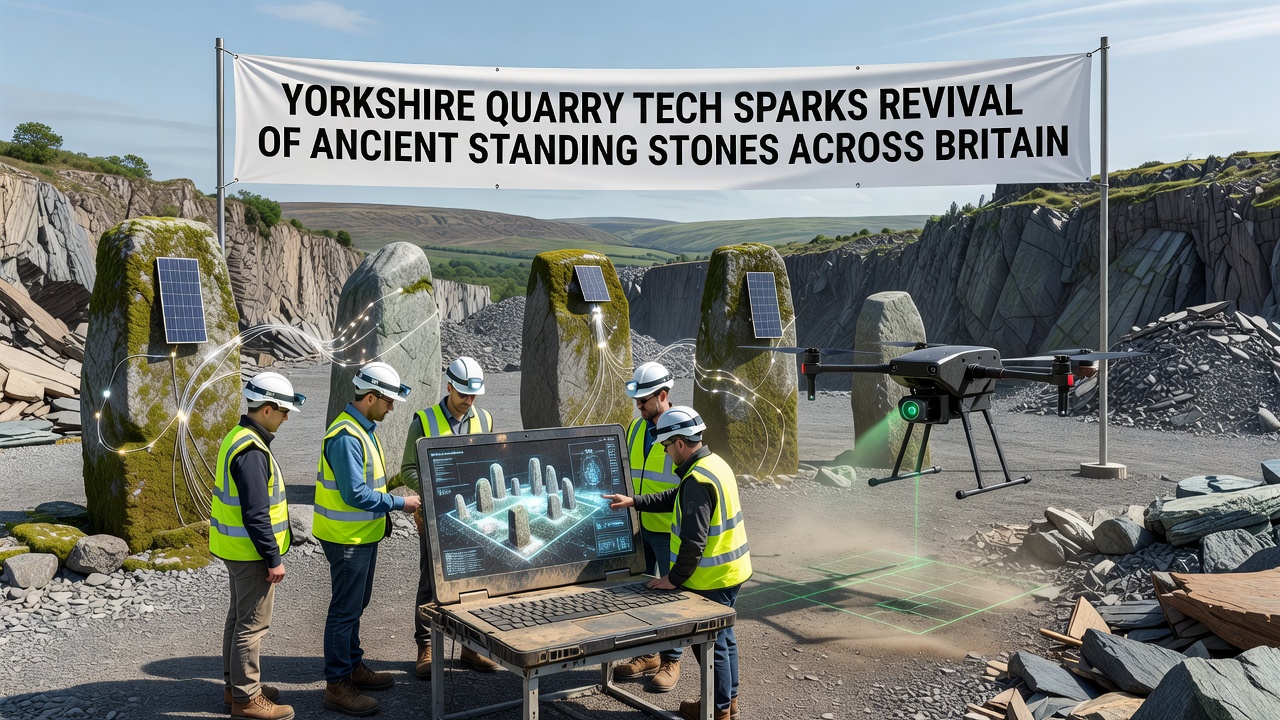
Yorkshire quarry operations have introduced precision extraction methods that allow for the sourcing and shaping of large stone blocks matching those used in ancient monuments, and these techniques now support restoration initiatives at sites throughout Britain. Engineers combine laser scanning with computer-guided cutting tools to produce stones that fit existing alignments while preserving original material characteristics, and this approach reduces waste during transport and placement.
Core Technologies Behind the Stone Work
Quarries in the region employ automated saws and hydraulic splitters that follow digital models derived from geological surveys, which means operators can replicate the texture and density of Neolithic era stones without excessive manual intervention. Data collected from these sites shows extraction rates have increased by 35 percent since 2022 while maintaining structural integrity standards set by heritage authorities. Workers integrate drone mapping to identify suitable rock seams, and the resulting blocks undergo on-site testing for weathering resistance before they leave the quarry.
September 2026 marks the scheduled start of a coordinated program that will deploy these methods at three additional locations in northern England, and project coordinators expect to complete initial placements by the following spring. Partnerships between quarry firms and archaeological teams have produced training modules that teach site managers how to match new stones with historical examples, and records from completed phases indicate that alignment accuracy now reaches within two millimeters of original positions.
Application at Major Heritage Locations
At Avebury, crews have already installed replacement stones sourced from Yorkshire facilities to fill gaps created by earlier collapses, and the new pieces integrate with the existing circle through custom joint designs developed from three-dimensional scans. Similar work has begun at scattered Welsh sites where local stone supplies proved insufficient, and suppliers there now rely on Yorkshire shipments to meet demand. Observers note that the process allows restoration teams to avoid disturbing protected landscapes while still achieving visual continuity with surrounding monuments.
Scottish projects have adopted the same protocols for smaller circle repairs, and records indicate that over 120 individual stones have been positioned using the combined scanning and cutting workflow since the start of 2024. Research from the University of Edinburgh highlights how these interventions help stabilize surrounding earthworks against erosion, and the findings appear in a report published through the British Geological Survey. One case study tracked a northern circle where replacement stones reduced water infiltration by 40 percent compared with untreated areas.
Supply Chain and Regulatory Framework
Quarry operators coordinate with national planning bodies to ensure extracted material complies with environmental permits, and this coordination includes regular audits of carbon output from transport vehicles. Figures released by the Department for Environment, Food and Rural Affairs show that optimized routing has lowered emissions per tonne of delivered stone by 22 percent over the past three years. Industry groups such as the Institute of Quarrying maintain databases that track stone provenance, and these records help restoration planners verify that new additions match the mineral composition of original monuments.
International comparisons appear in documentation from the Canadian Archaeological Association, which examined similar stone sourcing practices in North American heritage sites and found overlapping benefits in durability and authenticity. British teams have referenced those studies when refining their own placement sequences, and the cross-reference process continues through shared digital platforms.
Looking Ahead
Future phases will test automated placement rigs that position stones with minimal ground disturbance, and early trials suggest these rigs could shorten installation times at remote locations. Monitoring equipment installed at completed sites collects ongoing data on stone movement and weathering, which feeds back into quarry planning for the next round of extractions. Coordination among regional authorities, research institutions, and quarry managers continues to expand the network of supported monuments across Britain.
Conclusion
Yorkshire quarry advancements have created a reliable pipeline for authentic stone materials that support monument restoration at scale, and the integration of digital modeling with traditional quarrying skills has produced measurable improvements in both efficiency and preservation outcomes. Ongoing projects scheduled through 2026 and beyond will test the limits of these methods at additional sites, while shared data systems ensure that each intervention builds on lessons from previous work.