Jordan Jenkins · 19 October 2026
Stone's Hidden Threads: How Welsh Slate Reforms Are Quietly Reshaping Export Economics and Ancient Monument Care in Remote Regions
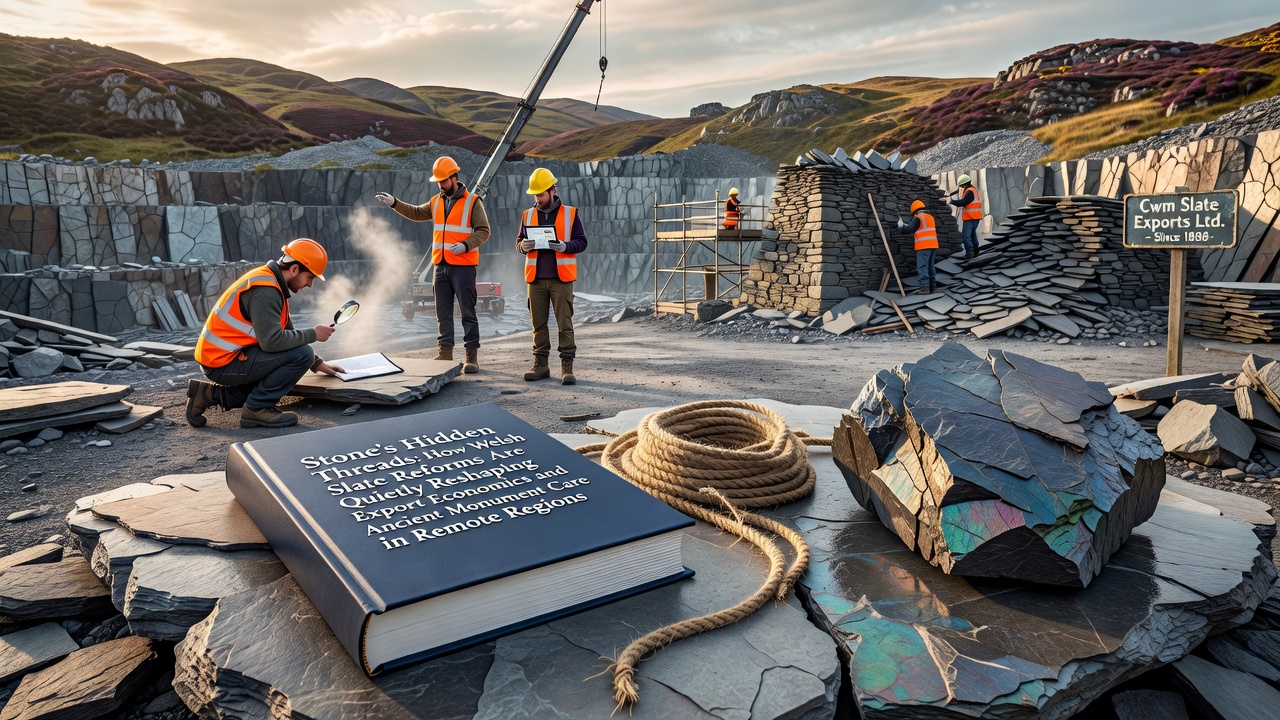
Welsh slate extraction has long supported both international trade routes and local heritage projects, yet recent licensing adjustments introduced in 2025 continue to alter supply chains and funding mechanisms for monument preservation across isolated communities. These changes affect how operators secure permits for new quarrying zones while directing portions of revenue toward conservation efforts at prehistoric sites that dot the Welsh uplands and similar remote landscapes elsewhere. Observers note that export volumes to markets in North America and parts of Asia have shifted since the updated environmental compliance rules took effect, creating ripple effects that reach beyond immediate production costs. Data from industry tracking services indicates that Welsh slate shipments declined by roughly 12 percent in the first half of 2026 compared with the prior year, largely because operators must now meet stricter biodiversity offset requirements before expanding extraction areas. This adjustment coincides with October 2026 deadlines for submitting revised site management plans, which tie continued export approvals to measurable contributions toward monument stabilization projects in nearby valleys. Those who've studied the sector know these requirements emerged after consultations involving quarry firms, local councils, and heritage agencies that recognized the dual role slate plays in modern construction and historical repair work.Export Shifts and Regulatory Adjustments
Quarry operators in Gwynedd and Snowdonia report that new licensing frameworks emphasize cumulative impact assessments, which evaluate how additional slate removal might influence groundwater patterns and nearby standing stone alignments. Research indicates these assessments add several months to approval timelines, prompting some exporters to reroute orders through alternative suppliers in Spain and Portugal while Welsh facilities adapt. Yet the same rules allocate a percentage of permit fees directly to regional conservation trusts tasked with maintaining ancient monuments that have weathered centuries of exposure in highland terrain.
Figures released by trade monitoring bodies show that architectural slate destined for restoration projects abroad now carries certification labels confirming compliance with Welsh environmental standards, a step that has opened doors to green building certifications in European Union countries. One study from university researchers tracking material provenance found that certified Welsh slate commands a modest price premium in restoration bids, offsetting some of the added compliance expenses. This development matters because remote monument sites often require matching stone that blends with original fabric, and consistent supply from regulated sources reduces the risk of mismatched repairs that accelerate weathering.
Connections to Monument Conservation Practices
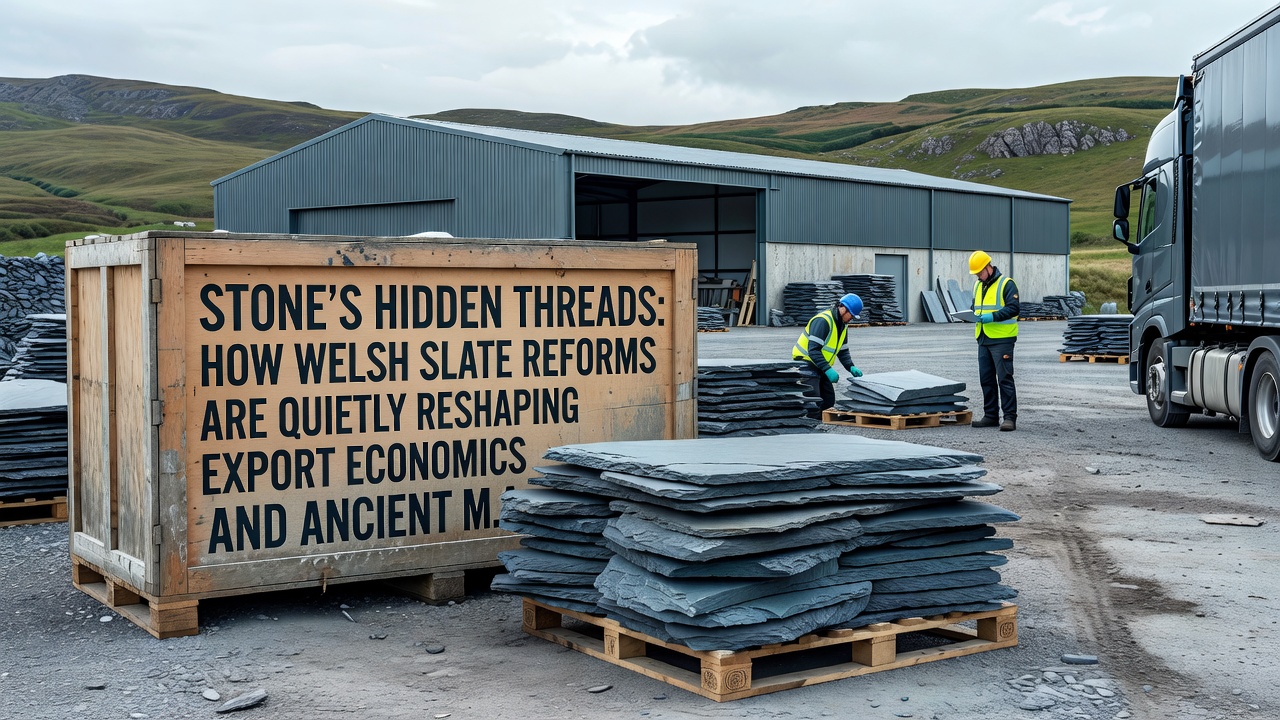
Conservation teams working at isolated prehistoric sites have begun incorporating slate offcuts from compliant quarries into structural reinforcement programs, particularly where erosion threatens the bases of megalithic arrangements. According to records maintained by heritage organizations, such reuse has increased since the reforms linked extraction permits to material donation quotas, allowing crews to source compatible stone without additional transport emissions from distant suppliers. People involved in these projects observe that the approach also supports local employment, as skilled workers trained in traditional dry-stone techniques handle both quarrying and on-site assembly tasks.
Similar patterns appear in other remote regions where comparable stone resources exist. In parts of the Scottish Highlands and certain Canadian shield areas, regulatory models that connect resource extraction to heritage stewardship have produced parallel outcomes, though the Welsh system stands out for its explicit export revenue sharing component. Data compiled by international geological surveys reveals that Welsh slate's durability characteristics remain competitive in global markets even after the added regulatory layer, sustaining demand from contractors who value consistent weathering performance over cheaper alternatives.
Broader Economic and Heritage Implications
Analyses from economic research centers indicate that the reforms have encouraged quarry operators to diversify into value-added products such as pre-cut restoration kits, which include documentation verifying ethical sourcing. These kits now feature in bids for monument projects across Europe and North America, where planners seek materials that satisfy both structural and environmental criteria. The shift has also prompted training programs that combine geological surveying skills with basic archaeological documentation methods, preparing workers to identify potential heritage features during routine site evaluations.
Remote communities benefit when export earnings support local trusts that coordinate monument care, creating a feedback loop where sustainable extraction underwrites the preservation of cultural assets that attract visitors and researchers alike. Reports from regional development agencies note that several upland parishes have used these funds to install protective barriers and drainage improvements around vulnerable stone arrangements, measures that extend the lifespan of sites previously at risk from seasonal runoff and visitor foot traffic.
Conclusion
The interplay between updated Welsh slate licensing and monument conservation continues to evolve as October 2026 compliance milestones approach, with ongoing adjustments to how revenue streams and material supplies intersect. External observers following these developments point to similar policy experiments in other stone-producing regions as evidence that integrated approaches can balance economic activity with cultural preservation when properly calibrated. Trade statistics and conservation records together illustrate that the reforms have already influenced both export patterns and site management practices, establishing precedents that may inform future resource policies in comparable remote settings worldwide.